30 July 2026
Reform an opportunity to build on regional environmental information infrastructure
The partnership of New Zealand’s 16 regional and unitary councils – Te Uru Kahika – welcomes the Parliamentary Commissioner for the Environment’s report Unlocking New Zealand’s environmental information.
Released yesterday, the report identifies opportunities to improve the country’s environment information systems, and highlights the valuable long-term work undertaken by regional and unitary authorities, including initiatives to try to move towards actionable and consistent data.
Iain Maxwell, Executive Director for Te Uru Kahika, said New Zealand should seize the opportunity presented by the resource management and local government reforms to build on current and past work, and develop an even more connected, accessible, and enduring environmental information system, while retaining critical regional-scale monitoring networks, science capability and local knowledge.
“The Parliamentary Commissioner for the Environment has given a clear, compelling definition of the barriers to unlocking New Zealand’s environmental information.
“We agree that while environmental information is immensely valuable, under the current settings it is too fragmented and difficult to access across agencies, and vulnerable to short-term and inadequate resourcing.
“The opportunity now is to use the reforms already underway to build a stronger system around the capability and networks that are already working. Regional and unitary councils have decades of expertise and experience to offer to future system design,” Mr Maxwell said.
Regional and unitary councils collect and interpret information that supports local decision-making about how to best look after the environment, natural resource use, infrastructure investment, emergency management, public health, and community resilience. They maintain long-term monitoring networks that provide this data at place, covering freshwater, air quality, land, coastlines, biodiversity and natural hazards.
Te Uru Kahika Chief Science Advisor Dr Chris Daughney said the report provided a timely opportunity to evolve the system, drawing on what New Zealand has already learned about effective environmental monitoring, science and data management.
“Regional and unitary councils have worked collectively over decades, alongside central government and other partners, to make environmental data more robust for local decision-making while also increasing national consistency and accessibility.
“This includes the National Environmental Monitoring Standards (NEMS) programme, which develops shared approaches to collecting environmental data, and Land, Air, Water Aotearoa (LAWA), the popular public website platform that brings together environmental information from councils across the country.
“NEMS and LAWA have operated for many years and provide an insight into what a federated system looks like in practice,” said Dr Daughney.
“Working within constrained budgets, councils and their partners have developed common methods, shared platforms and nationally accessible information while retaining the regional teams that collect, quality-assure and understand the local context of the data.
“These initiatives have delivered considerable national value, but progress has depended on limited project funding and the commitment of already stretched organisations. The next step requires secure, long-term investment and clearly defined roles,” said Dr Daughney.
Dr Daughney advised that looking ahead, national components of any future system should build on, reinforce and support regional delivery rather than replace it.
“We agree with the need for stronger national leadership, shared standards, coordinated investment, and common digital infrastructure.
“However, we must also keep in mind that environmental information is generated in catchments, airsheds, coastlines, and ecosystems. Effective monitoring requires sustained field networks, an understanding of local environmental systems, relationships with iwi and hapū and communities, and the ability to connect the data with decisions that are being made at place.
“A national organisation can provide direction, coordinate investment, support common standards and commission information products that make sense to develop once for the whole country.
“But the ongoing collection, quality assurance, interpretation and application of environmental information need to remain strongly connected to regional and catchment scales, where decisions are made and solutions are delivered,” said Dr Daughney said.
Dr Daughney advised that system reforms provide an opportunity to be deliberate about the roles of central and local government, research institutions, iwi, and other information custodians.
“A successful system would combine enduring regional-scale monitoring, science and data capability with strong national leadership and infrastructure, supported through reliable central and local government investment,” said Dr Daughney.
Te Uru Kahika will keep working with the Parliamentary Commissioner for the Environment, Central Government including then newly formed MCERT, Environmental Protection Authority, iwi, research organisations, and other data custodians on the future of New Zealand’s environmental information infrastructure.
ENDS
Media contact: Nicole Taber, Te Uru Kahika Communications Lead, 022 100 2422
About Te Uru Kahika
Te Uru Kahika – Regional and Unitary Councils Aotearoa is the partnership of New Zealand's 16 regional and unitary councils. We work together to protect and enhance our environment, build resilient communities, and support a thriving economy.
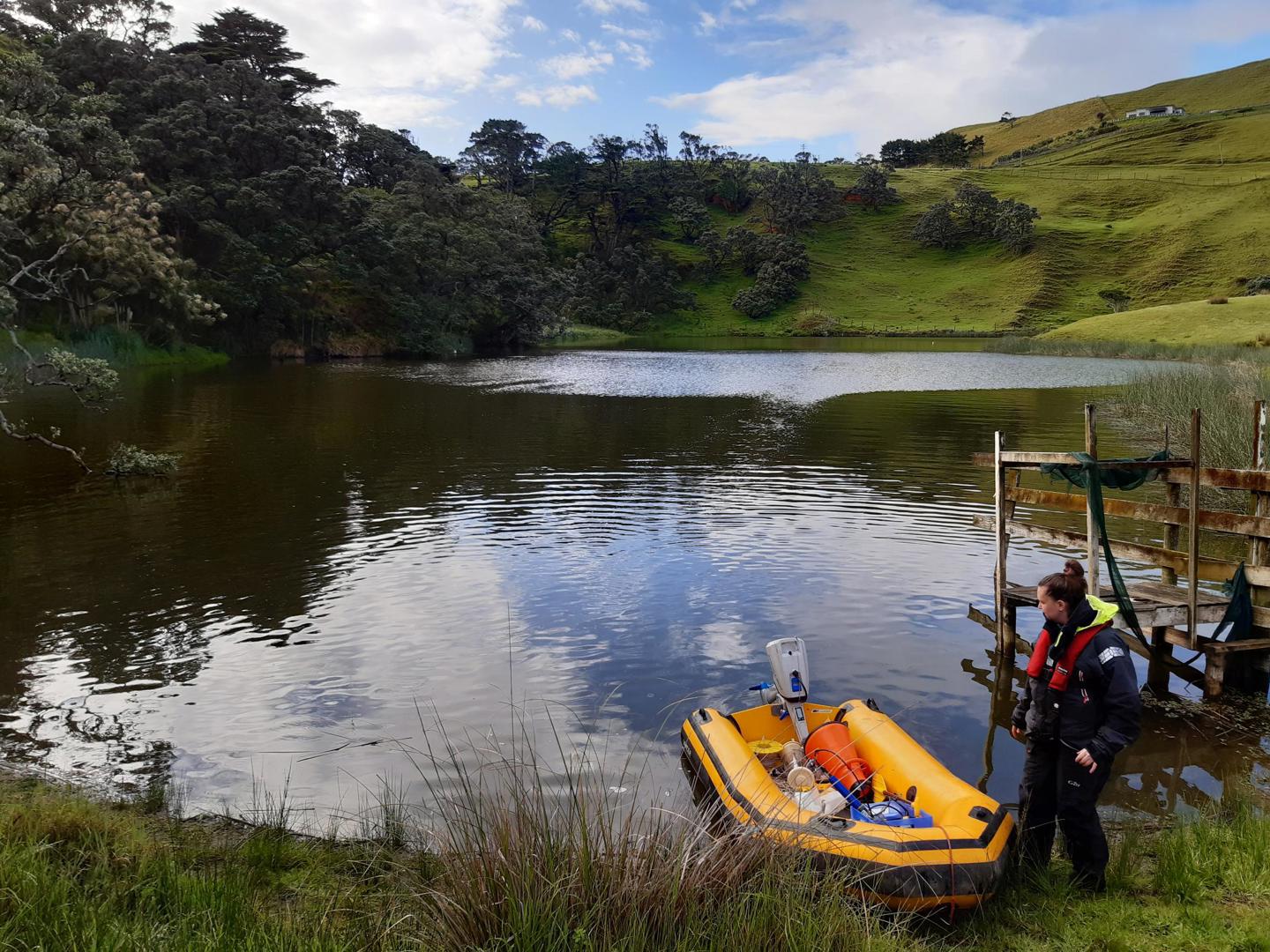
Environmental monitoring by Auckland Council. Image: LAWA.