From transactions to transformation - embedding true partnership at Greater Wellington Regional Council
At Greater Wellington Regional Council, a long-term organisational journey is reshaping how council works with iwi and hapū; moving beyond transactional consultation toward Tiriti-centred, outcome-based partnership.
Greater ambitions
Like many public organisations, Greater Wellington’s early engagement with mana whenua was largely advisory. Structures such as the Ara Tahi advisory committee, established in the early 1990s, created important foundations for dialogue, but they also highlighted the limits of engagement that sat alongside, rather than within, council decision-making.
Over time, council and iwi partners signalled a shared aspiration to move toward genuine partnership, with clearer sharing of responsibility and decision-making opportunities, while at the same time still recognising bilateral relationships. Milestones such as a Charter of Understanding in 2000, equal mana whenua and councillor representation on the Te Upoko Taiao Natural Resources Plan Committee in 2009, and a Memorandum of Partnership in 2013, reflected growing recognition that partnership is not a single initiative but an evolving organisational commitment.
Internally, this commitment meant confronting a central challenge: how to develop a whole-of-organisation approach where partnership with iwi and hapū shapes how work is designed, funded and delivered.
Co-designing systems for outcomes
Greater Wellington’s co-designed response has been to deliberately embed partnership in purpose-built systems, structures and processes. This is driven by strong partnership aspirations across the organisation - from executives and governance to operations. Greater Wellington’s staff value and prioritise mana ki te mana relationships – reciprocal and respectful connections between council and mana whenua.
A key step in Greater Wellington’s partnership journey was the development of Te Hunga Whiriwhiri – a group designed to move in partnership with mana whenua, from transactions to long-term relationships. Te Hunga Whiriwhiri took a “form follows function” approach to understand the outcomes that GWRC and mana whenua partners were seeking and how they could be achieved.
Te Hunga Whiriwhiri has developed three distinct but connected areas of work: strengthening relationships with mana whenua, understanding mātauranga Māori in organisational work, and improving internal systems and processes that enable partnership to function effectively.
Alongside Te Hunga Whiriwhiri, council introduced Te Whāriki, its Māori Outcomes Framework, to create a shared foundation for action by all members of the organisation.
Te Whāriki prioritises:
- Strong, prosperous and resilient Māori communities
- Effective partnering
- Engagement of equitable outcomes
- A capable workforce
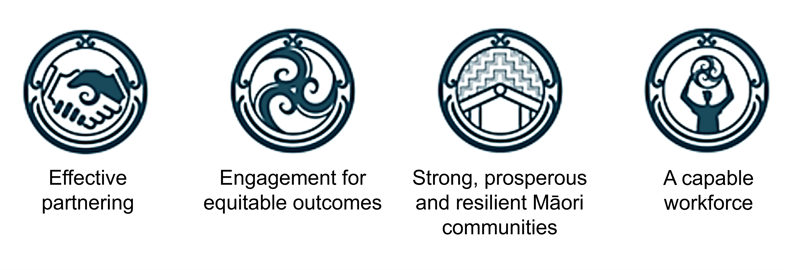
Te Whāriki positions iwi and hapū partnership as integral to achieving council’s environmental, social and economic priorities. The aim is clear: everyone in the organisation has a role in partnership, not just those directly engaging with iwi.
Greater Wellington Regional Council has developed several frameworks and approaches to help achieve the desired Te Whāriki outcomes, including:
- Te Tiriti Policy - ensuring Tiriti considerations are embedded early and consistently in policy development
- Mātauranga approach - to promote plural ecological and indigenous knowledge systems
- Te Iti Kahurangi – sharing knowledge, upskilling and empowering to unlock partnership potential
- He Whāinga o Rongomaioro – reframing partnership pathways as best practice
As part of He Whāinga Rongomaioro, Greater Wellington has begun reshaping how it invests alongside iwi and hapū. By consolidating fragmented contracts and funding streams into outcome-focused partnership arrangements, council is supporting longer-term, strategic collaboration. Foundational funding helps iwi build the organisational capacity needed to engage at a strategic level, while multi-year investment models provide continuity that supports sustained kaupapa Māori leadership and locally led solutions.
Together, these changes represent a shift from transactional engagement toward partnership by design.
Sustaining a partnership journey
Like everyone, Greater Wellington Regional Council and its partners are on a journey, and the work is never complete. Embedding partnership requires continued attention to leadership relationships, internal capability, and shared learning with iwi and hapū partners.
The council’s experience highlights that meaningful partnership depends not only on goodwill but on systems that elevate mana-ki-te-mana relationships and strategic investment, while embedding partnerships within, rather than alongside, the organisation. By aligning governance intent, organisational structures and delivery tools, Greater Wellington is strengthening its ability to co-design and deliver outcomes that benefit the region’s people and environment.